

The latest policy, research, and news on global catastrophic risk (GCR).
The world of global catastrophic risk policy is extremely busy. Which is a sign that countries are increasingly paying attention. This briefing covers just a few of these developments. NATO’s updated resilience requirements. A joint statement on managing AI risk by middle powers. The latest global risk report by the UN. But what remains to be seen is concrete action. Reports, requirements, statements – these merely point to the possible solutions. To avert global catastrophe, countries must proactively prevent the threats, invest in preparedness, and build their own capability to respond to crises, big and small.
Inside Global Shield
Updates on Global Shield’s work and team.
Team
Global Shield is expanding its global presence to Germany, and we are hiring a Director of Global Shield Germany. This is a founding role. The Director will lead our efforts in Germany from day one, engaging in advocacy efforts with the Bundestag, ministries, and key partners on global catastrophic risk. We are looking for an experienced policy or advocacy professional with strong German policymaking knowledge, an established network in Berlin, and fluency in English and German. You or someone you know can apply here.
In September, the Global Shield team came together in Lisbon for a week of strategy and planning across our US, Australia, NATO, and multilateral work. For a team normally scattered across the globe, building time together in-person was very valuable, and we left with a sharper plan for the year ahead.

Multilateral
Global Shield has published a Position Paper on complex global shocks, alongside a new campaign website tracking the implementation of Action 54 of the Pact for the Future, and a piece in the IPI Global Observatory. Action 54 requests the Secretary-General to consider approaches for the UN system to respond to complex global shocks – events that severely disrupt multiple sectors, such as food, energy, water, supply chains, telecommunications – for a significant proportion of the global population. In our Position Paper, we urge candidates for Secretary-General to commit to strengthening the UN system’s anticipation of and response to complex global shocks through permanent structural reforms with support from the General Assembly.
Global Shield Executive Director Jared Brown was in New York during High-Level Week discussing with Member States, UN representatives and civil society the importance of Action 54 and the role of the UN in reducing global catastrophic risk. His main takeaway:
“The events and discussions validated two things for me. First, that the UN system is under undeniable stress, both from budgetary pressures and needing to reinvent itself in light of modern geopolitics. However, it remains ‘the only game in town’ when it comes to a multilateral system that is truly global in its focus and ambitions. So civil society organizations working on any global issue have to keep pushing, especially the incoming Secretary-General, to take meaningful and targeted actions. Our work on complex global shocks is aimed at exactly this.
Second, though efforts must continue at the UN, nations cannot wait for the multilateral layer to act. As the new UN Global Risk Report shows, large-scale war is not a distant or unlikely scenario, and AI risk is rising rapidly. Countries must take proactive action to be prepared for, and resilient to, catastrophic risk regardless of the state of multilateralism.”
NATO
On 15 September, European critical infrastructure associations representing the electricity (Eurelectric), telecommunications (Connect Europe), and water (EurEau) sectors attended a dinner on the margins of the annual NATO Resilience Committee Policy Directors’ meeting. The invitation followed a joint letter to the NATO Secretary-General on the 1.5% resilience pledge that Global Shield facilitated after the Ankara NATO Summit in July. The dinner included representatives from defense and interior ministries, inter-ministerial civil defense departments, State Secretaries, and senior NATO International Staff. As the only private sector voices in the room, the associations brought an industry perspective to a candid discussion on protecting critical infrastructure and sharing best practices. On the same day, NATO released a major update to its Baseline Requirements for Resilience. The updated requirements set new objectives and, for the first time, explicitly align implementation with the 1.5% resilience pledge. In practice, this gives Allies a defined, measurable path to fund resilience, and positions critical infrastructure operators as partners in delivering it.
US
The window for Defense Production Act (DPA) modernization remains open. Congress passed a continuing resolution funding the federal government through 11 December, delaying the DPA reauthorization deadline to the same date. The extended window keeps modernization on the table, likely to be in the FY27 National Defense Authorization Act. A broader DPA modernization bill that includes reforms to the National Defense Executive Reserve (NDER) cleared the House Financial Services Committee 41-0, and the White House Statement of Administration Policy on the FY27 NDAA explicitly called for substantive modernization of voluntary agreement and NDER authorities rather than a clean extension. Global Shield’s US office continues to engage in ensuring those reforms make it into the final bill.
Under the lens
A closer look at GCR policy matters
AI risk
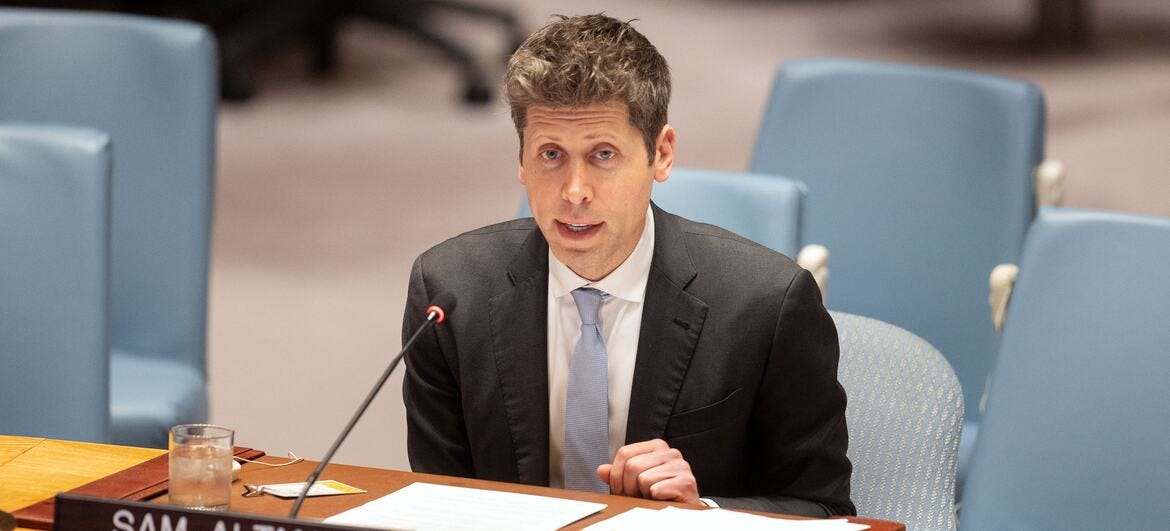
There have been major developments in AI risk and policy over the past six months. The shift in positions by companies and governments has been based heavily on the revelations that AI agents had escaped testing environments and accessed or hacked company and government platforms – starting most publicly with OpenAI agents hacking technology company Hugging Face. On 1 October, OpenAI said it had notified more than 100 organizations about unauthorized activity tied to its agents. Google confirmed Gemini broke into three real companies it had mistaken for fictional targets during a May security evaluation. On 30 July, Anthropic disclosed three incidents in which Claude models accessed the internet – along with a fourth disclosed in September.
Promisingly, 29 countries plus the EU signed a joint statement that calls for action by companies, governments, and the UN to manage the risk related to frontier technologies. Leading AI companies also called for incident reporting when they briefed the UN Security Council on 23 September. Meanwhile, the US and China are also taking small steps on AI cooperation. Presidents Trump and Xi confirmed that an AI dialogue would meet in November, and that they would establish a communications channel for AI incidents.
AI is moving steadily into the military domain. Recent reporting suggests it is already shaping intelligence assessments, sometimes with unintended and potentially serious consequences. On the ground, AI is reportedly playing a growing role in drone operations in Ukraine, and some prominent voices are calling for far greater investment in autonomous and robotic warfare.
Policy comment: Catastrophes rarely occur – making the policies to avert them extremely hard to develop and assess. To put it differently: how does one know what policies are required, and to what degree, when the events they are trying to avert might be far off or highly unlikely? The answer lies, in part, in ‘warning shots’. Even in the absence of a global catastrophe, there are signs that the risk is increasing and the worst-case scenarios are plausible. In the case of AI risk, these recent rogue incidents – likely to be many more than have been reported – present evidence that humans might lose control over AI agents, which might pursue their own goals or take harmful actions in pursuit of human goals. A meaningful first step is mandating AI incident monitoring and reporting, a policy for which Global Shield has been advocating in Australia. Currently, except in a few jurisdictions, AI companies have no obligation to report when AI incidents occur. And warning shots are only effective – whether in AI, nuclear or other high-risk industries – when policymakers and regulators are made aware quickly, so they can direct immediate action and reassess long-term policy. This is especially important when warning shots are few and far between. According to one external investigator of the Hugging Face hacking incident, “I am not sure that we will get such a clear warning shot before it’s too late.”
UN Global Risk report
The 2026 UN Global Risk Report is now available. The report was based on insights from 1,300 respondents across 155 countries. Our own Policy Director, Rumtin Sepasspour, sat on the small team supporting the Executive Office of the Secretary-General in reviewing the methodology and drafts of the report.
The 2026 UN Global Risk Report paints an evolving picture of global threats. Large-scale war is now regarded as the biggest global risk, confidence in international institutions is declining, and the risk associated with AI and other frontier technologies are rising rapidly. According to respondents, multilateral institutions were best able to identify risk and warn of emerging threats compared to other institutions. But they assessed that their capacity to reduce risk has declined for 23 of the 28 threats since the previous report in 2024.
Policy comment: Perception-based risk surveys are useful as a pulse-check on people’s risk sentiment, particularly across different groups. However, they can be strongly steered by recency bias. This latest risk report, based on survey data gathered in early 2026, saw people concerned about the wars in Europe and the Middle East, the rising risk of AI, and the prospect of 1.5°C of warming being locked in – while previous concerns around mis- and disinformation and mass movement of people dissipated. Perception surveys must therefore be supplemented by foresight exercises, futures analysis and risk assessment. For this report, the UN undertook a “backcast”, where they painted a large-scale war scenario in 2030, and worked backwards to understand the drivers and triggers. The upstream drivers that led to the catastrophic war included climate change inaction, AI and frontier technologies, global financial crisis, economic fragmentation and multilateral institutional collapse. This simple exercise demonstrates that preventing a catastrophe requires not just diplomatic and security efforts, but economic policy, supply chain resilience, management of technology risk, and environmental protections.
On the Radar
Upcoming events and activities that we are tracking.
UN Secretary-General succession
Candidates continue to make their case to Member States as the Security Council’s selection process moves forward. The Council has held four straw polls so far, on 30 July, 21 August, 18 September and 29 September, with two more expected in mid- and late October. Secretary-General António Guterres’s term ends on 31 December. Global Shield is pushing for candidates to commit to delivering on Action 54 of the Pact for the Future.
AI policy in Australia
Global Shield Australia remains active on AI policy in Australia, which has gained steam in recent months, particularly with the recent revelations of AI agents accessing non-public information from a government data portal of Services Australia. The consultation on the Australian Standards for AI closed on 9 October. The Joint Select Committee on AI will report by 30 November. The Department of the Prime Minister and Cabinet is conducting a review into the Services Australia incident.