
The latest policy, research and news on global catastrophic risk (GCR).
Strategic competition between major powers has dominated the geopolitical landscape over the past decade. But as this month’s briefing highlights, middle powers and regional groups have a major role in reducing global catastrophic risk. From India to Australia to other OECD countries, from ASEAN to the EU to NATO, averting catastrophe will require all countries, regions and coalitions to take action.
Inside Global Shield
Updates on Global Shield’s work and team.
We welcome Jobe Solomon as Director of NATO Policy. Jobe brings a deep expertise in defense policy, transatlantic security, civil-military coordination, and resilience-building across multiple countries. Jobe will lead our advocacy within the Alliance, which will focus on advancing adherence to the existing seven baseline requirements for resilience, including assured continuity of government and critical government services, ability to deal with mass casualties and disruptive health crises, and resilient food and water resources.
International
Global Shield made a submission to the Public Consultation for the draft OECD Recommendation on the Governance of Critical Risks. The current version of this OECD recommendation, which was adopted in 2014, provides guidance to governments of the 38 member states on managing strategically significant risk. It is a benchmark for national risk management.
In our submission, we strongly supported the updated guidance. The guidance outlines useful and practical steps for managing risk, such as around anticipating critical risks, fostering continuity of government and critical infrastructure resilience, coordinating a whole-of-society effort to mitigate risk, and establishing crisis management authorities and processes. If a government were to deliver on only part of the guidance, they would be world-leading – demonstrating the chasm between current effort and world’s best practice. We would encourage all governments, not just those of the OECD, to compare their current policies, programs and activities against the final Recommendation, once released, and implement key recommendations.
United States
The US Congress is making progress on modernizing the Defense Production Act. This Act has recently gained prominence and attention due to the use of its authorities to direct and revitalize the US industrial base, and as the legal cornerstone of efforts during COVID-19 to scale production of personal protective equipment and other countermeasures. Global Shield US has been championing the modernization of the DPA, particularly to enable the greater involvement of private sector expertise in the planning for and response to national security crises, including global catastrophes.
Under the lens
A closer look at a GCR policy matter.
The role of middle powers in AI progress, diffusion and governance
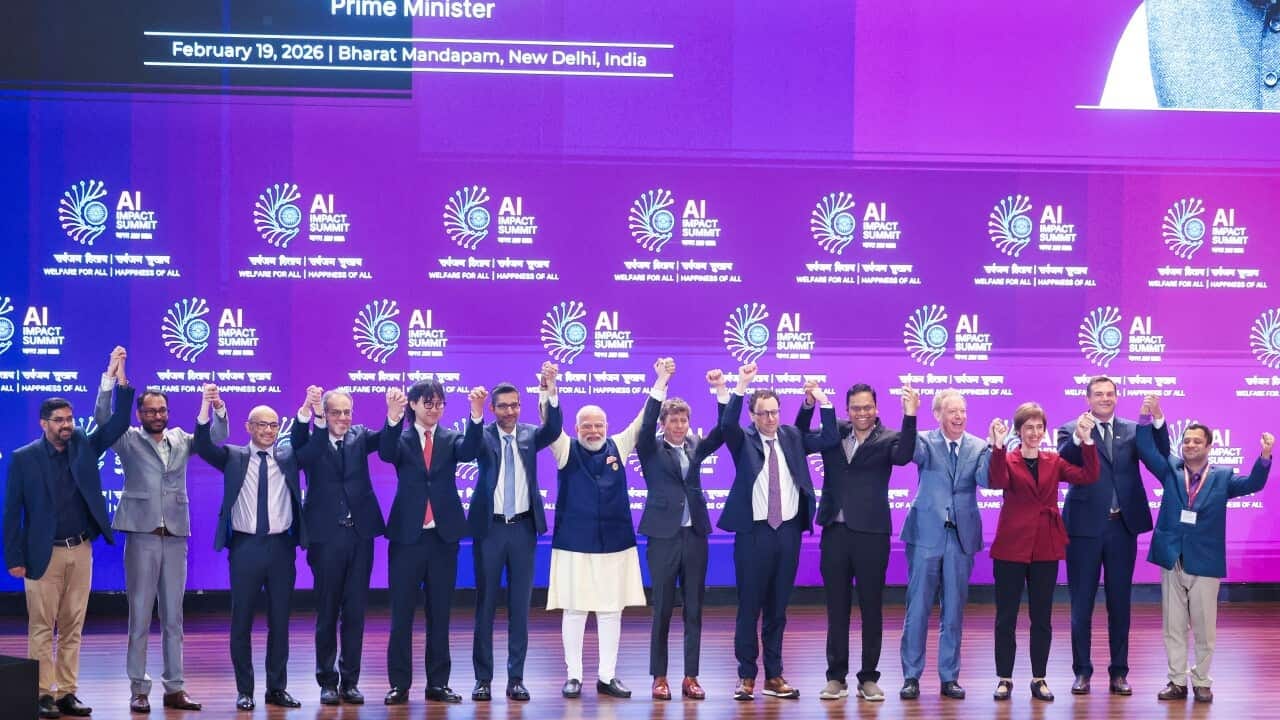
The India AI summit, held on 16–21 February in New Delhi, drew over 20 heads of government, delegations from 118 countries, more than 100 global AI CEOs, and over 250,000 participants. It was the first of the AI summits hosted by a Global South nation. The main outcome was the India AI Impact Summit Declaration, endorsed by 92 countries and international organisations, which affirmed principles around equitable AI diffusion, trusted AI frameworks, scientific collaboration, and workforce reskilling.
A new report by Chatham House states that “Middle powers that fail to secure influence over the development, deployment and governance of artificial intelligence (AI) will likely forfeit control over their economies, societies, political systems and positions in the global economy.”
A new report by the Foundation for American Innovation assesses that middle powers have both the most to lose and gain from AI transformation “because they have significant institutional and industrial capacity but without frontier AI development capability.” The main challenges middle powers will need to contend with are the likely upending of economic and industrial strategies, erosion of states’ ability to govern and balance shift between offense and defense.
In a recent post, Anton Leicht argues for AI safety advocates in middle powers to shift focus to national sovereignty and AI strategies, AI deployment, and resilience rather than an attempt to shape AI development in the US and China.
Southeast Asian countries are also leaning into AI policy and governance. For example, Vietnam has become the first country in the region to develop an AI Law, which took effect on 1 March. Indonesia is “positioning itself as a proactive player in both national and regional AI governance”, according to local media. In Malaysia, an Artificial Intelligence (AI) Governance Bill is being drafted by the government to address increasingly complex technological threats, including the misuse of deepfake technology.
Policy comment: The development of AI is heavily dictated by the US and China, and their respective technology ecosystems. However, middle powers are not powerless. Or, at least, their actions will determine how much influence they have over AI companies and over AI’s impact on their economies and societies. A middle power strategy for AI should therefore be based on a foundation of domestic sovereignty, stability, and resilience. By developing this approach, middle powers will be able to better navigate the uncertainty of AI progress. And they would be more able to participate in global AI progress and global governance, and more easily form coalitions that temper and navigate US-China competition.
Such a strategy could cover three areas:
First, middle powers could take a preparedness-first approach to domestic AI governance. This would ensure they are prepared for, and can effectively respond to, potential harms, such AI-enabled crime and terrorism, highly disruptive economic dislocations, breakdown in social cohesion and public trust, and rising risk of international conflict and instability.
Second, they could focus on developing a specialized component or role in the AI supply chain, such as R&D, talent, compute and critical minerals. This allows the middle power to influence and participate in AI developments, and be at the negotiating table of global governance.
Third, they could establish mechanisms to engage with and participate in frontier AI development and diffusion. For example, they could maintain domestic technical capacity to evaluate and monitor AI models, and maintain formal channels with frontier AI developers. And they could build a dedicated technology assessment capability to monitor and anticipate AI disruptions. This enables middle powers to shape rather than receive the terms of AI progress.
On the radar
Upcoming events and activities that we are tracking.
Resilience conferences
Global Shield Australia will be participating in two resilience-focused conference in March: the Australian National University National Security College’s annual conference (”Securing our Future: a ready and resilient Australia“) and the Department of Home Affairs’ Critical Infrastructure Conference (”Resilient Connections“).
EU preparedness
We are tracking updates to the delivery of the EU Preparedness Union Strategy, which reaches its one-year mark on 25 March. A “European Security Strategy” is also expected in the coming months. EU citizens are being invited to share their experiences and ideas on preparedness. The EU-NATO cooperation on resilience will be a focus of our Director of NATO Policy.
Global conflicts
New conflicts erupted around the world in the past month. The hostilities in Iran and the wider Middle East region have been the most significant. The October 2025 ceasefire between Pakistan and Afghanistan has broken after recent militant attacks in Islamabad, leading to further cross-border hostilities. The International Crisis Group identified 13 conflicts that deteriorated in February. We are deeply concerned about the impact of global tensions on global catastrophic risk, such as the use and proliferation of weapons of mass destruction, the risk of escalation, and supply chain disruptions.
This briefing is a product of Global Shield, the world’s first and only advocacy organization dedicated to reducing global catastrophic risk of all hazards. With each briefing, we aim to build the most knowledgeable audience in the world when it comes to reducing global catastrophic risk. We want to show that action is not only needed, it’s possible. Help us build this community of motivated individuals, researchers, advocates and policymakers by sharing this briefing with your networks.