

The latest policy, research and news on global catastrophic risk (GCR).
As the year comes to a close, it is time to take stock. Is global risk increasing or decreasing? Is our preparedness building or declining? Is governance strengthening or weakening? Are governments collaborating or splitting? Are people getting more hopeful or more gloomy? Are our problems getting harder or easier?
If you sit on the side of the spectrum that leans more despairing or cynical or worried, and you’re looking out to the next year with concern, know that there are many, many people, working every day to create a world that is safe, secure, healthy and flourishing.
They are building the governance structures we need, even when progress feels slow. They are forging collaborations across borders, sectors and parties, even when relationships are strained. They are developing the tools, the systems and the knowledge that might make the difference when it matters most. They are leading with guts and heart when the world needs more of both. And, often, they are doing so without fanfare.
Perhaps you’re one of them. Perhaps you’re trying to figure out how to be.
So for those fighting in the ring, take your well-earned rest. Reflect on the year that’s gone, strategize for the year ahead, and then get back out there.
If you’re outside the ring, we need all the help we can get. The stakes are too high to keep quiet, sit it out or throw in the towel.
See you in the new year!
Resolving the governance gap
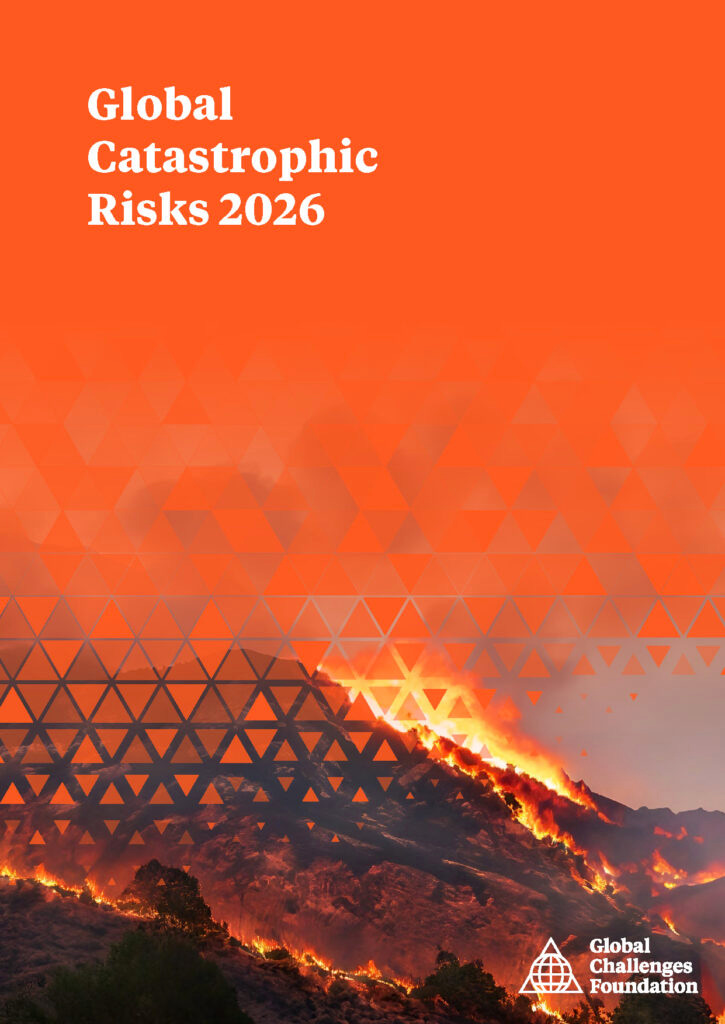
Global Challenges Foundation has released their Global Catastrophic Risks 2026 report. It provides individual sections on the example threats of climate change, ecological collapse, weapons of mass destruction, military AI, and near-Earth asteroids. Each threat is paired with a section on the governance challenges. The report is a useful stock-take on global catastrophic risk, both individually and collectively, as at the end of 2025.
A core theme throughout the report is interconnectivity: “Global risks are becoming increasingly interconnected, accelerating and reinforcing one another across environmental, technological and security domains. As this report shows, outdated governance, rising geopolitical tensions, and fragmented institutions leave humanity exposed. Addressing escalating systemic threats requires renewed legitimacy, stronger cooperation and a more adaptive, anticipatory global governance architecture capable of managing shared risks.”
The report identifies a number of shifts that need to occur to manage global catastrophic risk. For example, it states that governance needs to shift from fragmentation to connection and adaptability: “States, institutions and funders must work together to build bridges between systems so we can manage global risks as the interconnected challenges they are.”
Policy comment: Humanity faces a widening governance gap. Like a leaky house with poor foundations, governance systems are not built for 21st century risk. They are struggling to manage long-standing threats we’ve yet to solve – like nuclear risk and climate change. New dual-use technological threats, like AI and synthetic biology, are emerging faster than institutions can adapt. And existing governance has little ability to manage the intersection of threats, like the cyber-AI-nuclear nexus in global security, or the climate-energy-food-water nexus facing our economic and environmental systems. Governance architecture, at both global and national levels, remains fragmented. It is designed for an era when challenges could be addressed separately, when institutions had time to evolve in response to emerging threats, and when problems respected the boundaries of issue areas and ministerial portfolios. Calling the governance gap a “catastrophic threat” in and of itself is probably a step too far – but it needs to be treated with the same level of urgency and imagination. For example, at the national level, governments should modernize laws they hav relied upon for traditional national security threats to be more all-hazards in focus. At the international level, governments should build on commitments made in bilateral and multilateral fora to establish shared resilience across borders, as true global catastrophic threats will not respect them.
Institutionalizing global risk reduction
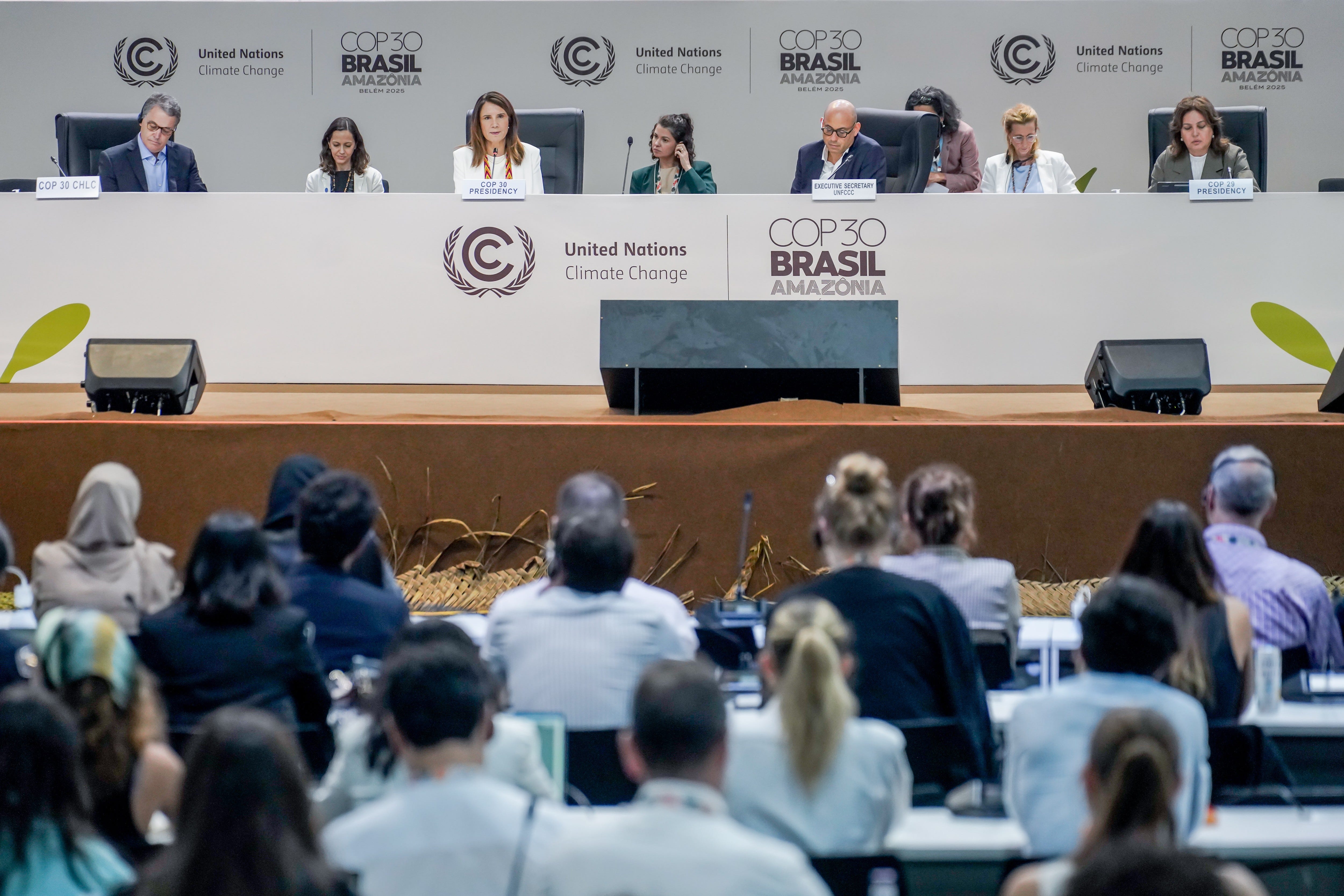
The 30th gathering of the Conference of the Parties under the UN Framework Convention on Climate Change (UNFCCC) – or COP30 for short – met in Belém, in the north of Brazil, over 10-21 November. A Heads of State Summit was held earlier in the month. COP30 concluded with mixed results, characterized by minimal progress on key mitigation issues like fossil fuels, but was considered a step forward on adaptation finance and social equity. Before the event, the Brazilian leadership sought to frame COP30 as the “Implementation” COP or the COP of “truth”. Brazil’s President wrote an op-ed on how Brazil is seeking to lead on preventing and addressing climate change.
As the key multilateral forum for climate change action, the annual COP meetings provide an opportunity for organizations to release their latest research into climate change. The Lancet released the 2025 report of the Lancet Countdown on health and climate change. The report, produced by 128 experts from more than 70 academic institutions and UN agencies, noted that “the higher temperatures and the increasing size of vulnerable populations have led to a 63% increase in heat-related deaths since the 1990s”. Another group of climate scientists released their “2025 state of the climate report.” Key highlights of the year include 22 of 34 planetary vital signs sitting at record levels and that “warming may be accelerating, probably driven by reduced aerosol cooling, strong cloud feedbacks, and a darkening planet.” The Global Tippings Point Report 2025 notes that global warming, which will soon exceed 1.5°C, “puts humanity in the danger zone where multiple climate tipping points pose catastrophic risks to billions of people.” Already warm-water coral reefs and polar ice sheets are approaching tipping points, each of which could impact hundreds of millions.
Policy comment: COP30 – ten years since the Paris Agreement – mostly did not meet the expectations of civil society and countries that want to see continued meaningful progress towards climate goals. However, annual summits like these are irreplaceable. They create opportunities for countries to lead on the global stage, for policymakers to make new commitments, for domestic constituencies to pressure their governments, for civil society to access power, and for researchers to publish their work. No other catastrophic threat receives such a strong and regular forcing function. Non-proliferation treaty review conferences happen every five years, with limited non-state participation and minimal public visibility. Pandemic preparedness, under the auspices of the World Health Organization, was boosted by the recent “Pandemic Treaty” but has mostly lost multilateral and national momentum. The Convention on Biological Diversity has its own Conference of the Parties meetings focused on biodiversity loss, ecosystem protection, and genetic resources, but occur biennially and with very little political and media attention. The climate COPs have normalized the premise that climate change requires a collective global response. In a time of fragmenting multilateralism, COPs are – despite the gloomy climate outlook – a ray of hope. Civil society representatives and advocates for other catastrophic threats should look to them as an example for how to institutionalize sustained global coordination. The world might be very different from the 1990s, when COPs began. But a key lesson is that once they become routine, the infrastructure becomes self-reinforcing, especially when civil society mobilizes.
This briefing is a product of Global Shield, an international advocacy organization dedicated to reducing global catastrophic risk of all hazards. With each briefing, we aim to build the most knowledgeable audience in the world when it comes to reducing global catastrophic risk. We want to show that action is not only needed, it’s possible. Help us build this community of motivated individuals, researchers, advocates and policymakers by sharing this briefing with your networks.